Leicester Surveyors regularly encounter subsidence and structural movement issues across Leicester's diverse property stock. Understanding these problems helps homeowners identify risks early and take appropriate action to protect their property investment.
Important: Structural movement can indicate serious problems requiring immediate attention. Professional assessment by qualified chartered surveyors is essential for accurate diagnosis and appropriate remedial action.
Why Leicester Properties Are Vulnerable to Subsidence
Leicester's geological conditions make certain properties particularly susceptible to ground movement and structural issues. Understanding these factors helps property owners assess their risk and take preventive measures.
Leicester's Clay Soil Challenge
Leicester sits predominantly on clay soil, which expands and contracts significantly with moisture changes. This natural movement affects building foundations, particularly in older properties with shallow foundation depths.
- Seasonal Movement: Clay soil shrinks in dry weather and expands when wet
- Tree Root Impact: Mature trees extract moisture, causing localised soil shrinkage
- Drainage Effects: Water management around properties affects soil stability
- Foundation Depth: Victorian and Edwardian properties often have inadequate foundation depth

Types of Structural Movement
Subsidence
Downward movement of foundations due to soil shrinkage or erosion beneath the building.
- Causes: Soil shrinkage, water table changes, root action, drain leaks
- Signs: Diagonal cracks, door/window binding, floor level changes
- Risk Areas: Properties near large trees, on clay soil, with poor drainage
Settlement
Natural compression of soil under building loads, typically occurring soon after construction.
- Characteristics: Usually uniform, occurs early in building life
- Signs: Hairline cracks, minor level differences
- Concern Level: Generally not serious if movement has ceased
Heave
Upward ground movement, often occurring after tree removal when clay soil rehydrates.
- Causes: Soil expansion, reduced tree root activity, increased moisture
- Signs: Upward floor movement, door frames lifting, roof distortion
- Timeline: Can occur years after tree removal
Identifying Structural Movement in Leicester Properties
Surveyor Expertise: Leicester Surveyors use specialist equipment and techniques to assess structural movement, distinguishing between historic settlement and active subsidence requiring intervention.
Warning Signs to Watch For
External Signs
- Cracks wider than 5mm in external walls
- Stepped cracking following mortar joints
- Diagonal cracks near corners or openings
- Separation between different building elements
- Chimney stack leaning or separation
- Bay window pulling away from main structure
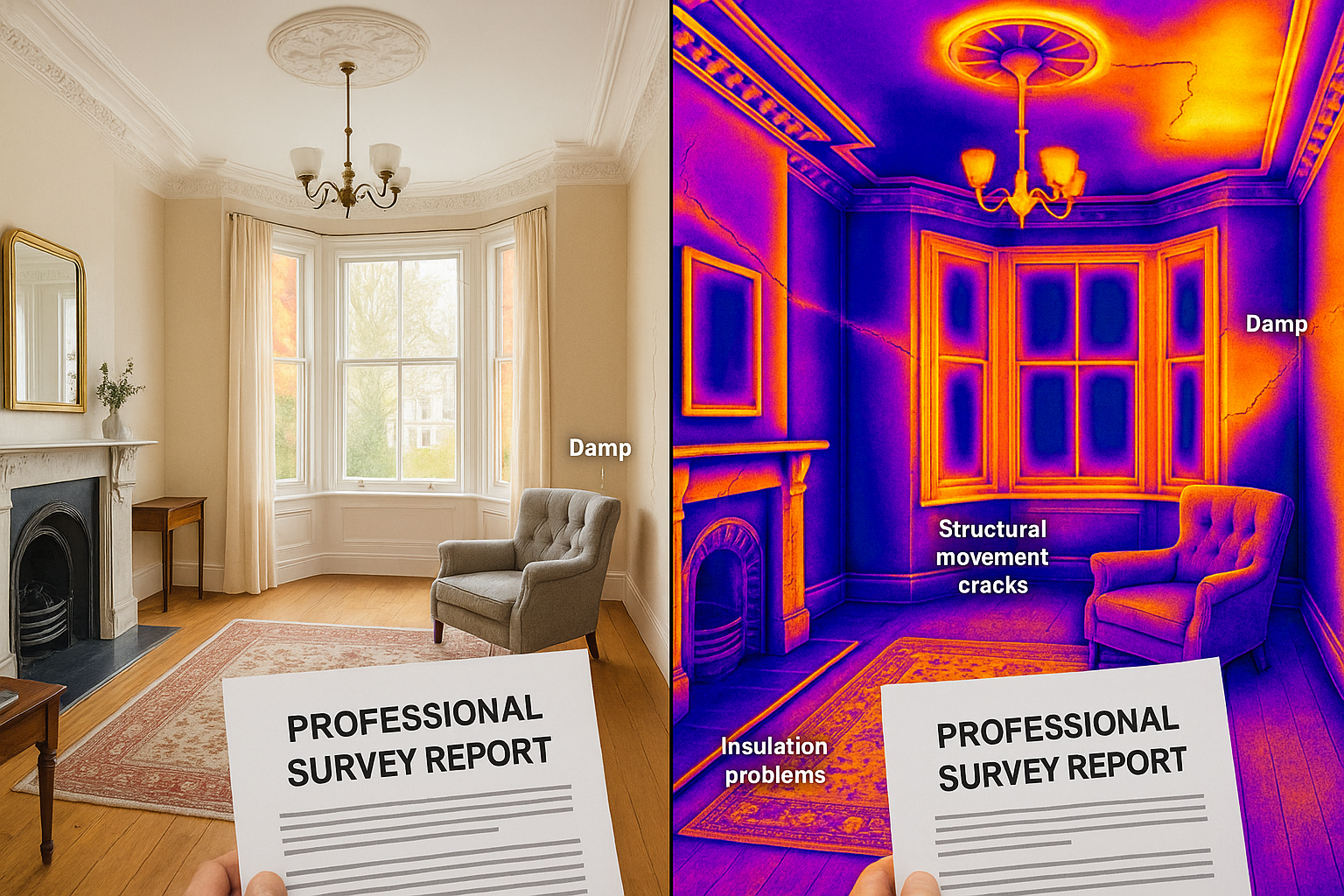
Internal Indicators
- Doors and windows sticking or not closing properly
- Cracks appearing above door and window openings
- Floor level changes or bouncy floors
- Internal wall cracks, especially near corners
- Torn wallpaper along crack lines
- Gaps appearing around skirting boards
Leicester-Specific Risk Areas
High-Risk Locations
Certain areas of Leicester present elevated subsidence risk due to soil conditions, tree coverage, or historic factors:
- Clarendon Park: Mature tree-lined streets with Victorian properties on clay soil
- Stoneygate: Large trees and period properties with shallow foundations
- Evington: Mixed soil conditions and varied tree coverage
- West End: Some areas affected by historic industrial activity
Property Types at Risk
Victorian Terraces
- Shallow foundations (typically 2-3 feet deep)
- Solid wall construction sensitive to movement
- Bay windows creating additional foundation loads
- Original lime mortar more prone to crack visibility
Edwardian Properties
- Improved foundation depths but still vulnerable
- Large garden trees often planted close to buildings
- Bay windows and architectural features increasing complexity
Assessment and Monitoring Techniques
Professional Survey Methods
Leicester Surveyors employ various techniques to assess structural movement:
Crack Monitoring
- Tell-tales: Glass strips monitoring crack movement
- Precision Measurement: Accurate crack width and length recording
- Photographic Records: Detailed documentation for comparison
- Seasonal Monitoring: Assessment over different weather conditions
Level Surveys
- Floor Level Assessment: Detecting differential movement
- Wall Plumb Checks: Vertical alignment measurement
- Door and Window Alignment: Frame distortion analysis
Technology-Enhanced Assessment
- Laser Level Equipment: Precise measurement of structural geometry
- Digital Photography: High-resolution crack documentation
- Thermal Imaging: Identifying moisture-related movement triggers
- Ground Penetrating Radar: Foundation and soil condition assessment
Professional Advantage: Leicester Surveyors maintain equipment calibrated to detect millimetre-level movement, providing accurate assessment of structural stability and movement trends.
Causes of Subsidence in Leicester
Tree-Related Subsidence
The most common cause of subsidence in Leicester's residential areas:
High-Risk Tree Species
- Oak: Deep root systems, high water demand
- Poplar: Aggressive root growth, particularly problematic
- Willow: Extensive root systems seeking water
- Ash: Deep roots, significant water uptake
- Plane: Common in Leicester streets, moderate risk
Safe Distances
General guidance for tree distances from properties:
- High water demand trees: 1.5 x mature height
- Moderate water demand: 1.0 x mature height
- Low water demand: 0.5 x mature height
Drainage-Related Issues
- Leaking Drains: Soil erosion beneath foundations
- Poor Surface Drainage: Water accumulation affecting soil stability
- Gutter Problems: Localised soil saturation or drying
- Water Main Leaks: Significant soil disturbance
Remedial Solutions and Treatments

Underpinning
The primary structural solution for severe subsidence:
Mini-Pile Underpinning
- Method: Steel or concrete piles driven to stable ground
- Advantages: Suitable for most soil conditions, minimal excavation
- Cost: £15,000 - £50,000 depending on extent
- Duration: 2-6 weeks typically
Mass Concrete Underpinning
- Method: Excavation and concrete foundation extension
- Suitability: Limited movement, stable soil conditions
- Cost: £8,000 - £25,000 for typical Leicester terrace
Root Barriers and Tree Management
- Root Barriers: Physical barriers preventing root growth toward foundations
- Tree Removal: Careful removal with heave monitoring
- Crown Reduction: Reducing water demand while preserving trees
- Species Selection: Appropriate tree planting for clay soil areas
Insurance and Legal Considerations
Subsidence Insurance Claims
Most home insurance policies cover subsidence, but understanding the process is important:
- Policy Excess: Typically £1,000 - £5,000 for subsidence claims
- Investigation Period: Insurers typically monitor movement for 12 months
- Professional Reports: Structural engineer reports usually required
- Alternative Accommodation: May be provided during major works
Important: Failure to declare known subsidence issues when selling can result in legal action. Always disclose any structural problems and remedial work undertaken.
Property Sale Implications
- Professional structural reports required for mortgage applications
- Insurance history affecting future cover and premiums
- Warranty arrangements for completed remedial work
- Monitoring arrangements demonstrating stability
Prevention and Maintenance
Preventive Measures
- Drainage Maintenance: Regular gutter and drain clearance
- Tree Management: Professional advice on tree surgery
- Soil Moisture Control: Appropriate watering during dry periods
- Foundation Protection: Ensuring adequate clearance and ventilation
Early Intervention Benefits
- Lower repair costs compared to major underpinning
- Reduced insurance claims affecting future premiums
- Maintained property values and marketability
- Prevention of secondary damage to services and finishes
Professional Survey Importance
Leicester Surveyors provide essential expertise in assessing structural movement, distinguishing between different causes, and recommending appropriate action.
What Professional Surveys Provide
- Accurate Diagnosis: Determining whether movement is active or historic
- Cause Identification: Understanding underlying factors causing movement
- Risk Assessment: Evaluating likelihood of future problems
- Remedial Advice: Appropriate solutions for specific situations
- Monitoring Guidance: Ongoing surveillance recommendations
Leicester Expertise: Our extensive experience with local soil conditions, building types, and subsidence patterns enables accurate assessment and appropriate advice for Leicester property owners.
When to Seek Professional Help
Structural movement requires prompt professional assessment to prevent minor issues becoming major problems.
Immediate Assessment Needed If:
- New cracks appearing or existing cracks widening rapidly
- Doors and windows suddenly sticking or not closing
- Floor levels changing noticeably
- External walls showing obvious movement or separation
- Internal walls developing significant cracks
Leicester Surveyors provide rapid response for urgent structural concerns, ensuring appropriate action protects both safety and property values.
Expert Structural Assessment
Professional evaluation of structural movement and subsidence risks
Book Structural Survey